For a few strange years, the place we worked was an accident.
A laptop on the kitchen table, cleared away before dinner. A dining chair pressed into service, its wooden seat arguing with your lower back by mid-afternoon. A lamp dragged in from another room, angled apologetically at a webcam. We made do, because making do was the whole spirit of the time. Nobody planned to work from home. It simply happened to us, and our rooms absorbed the shock as best they could.
That era is over. And the space where you work deserves to know it.

The shift nobody announced
Something quietly changed between then and now. The improvised setups either disappeared — folded back into kitchens and spare corners as people returned to offices — or they put down roots. And the ones that stayed began, slowly, to be chosen.
You can see it in the way people talk about their spaces now. The question is no longer "where can I take this call?" but "what do I want this corner to feel like?" The workspace has crossed a threshold: from equipment to interior. From something you tolerate to somewhere you live.
This is the shift Workspace Worthy exists for. Not the novelty of working from home — that story has been told — but the maturing of it. The moment a space stops being furnished by circumstance and starts being furnished with intent, the way you'd furnish a living room or a bedroom. Chosen, arranged, lit like you mean it.
"The workspace has crossed a threshold: from equipment to interior. From something you tolerate to somewhere you live."

Function alone was never enough
The first wave of working-from-home advice treated the workspace like an IT problem. Screen height. Chair adjustability. Cable management. All of it matters — your body keeps the score of a bad chair, and no amount of styling redeems a desk that hurts to sit at.
But function alone builds a cubicle. And nobody dreams of installing a cubicle in their home.
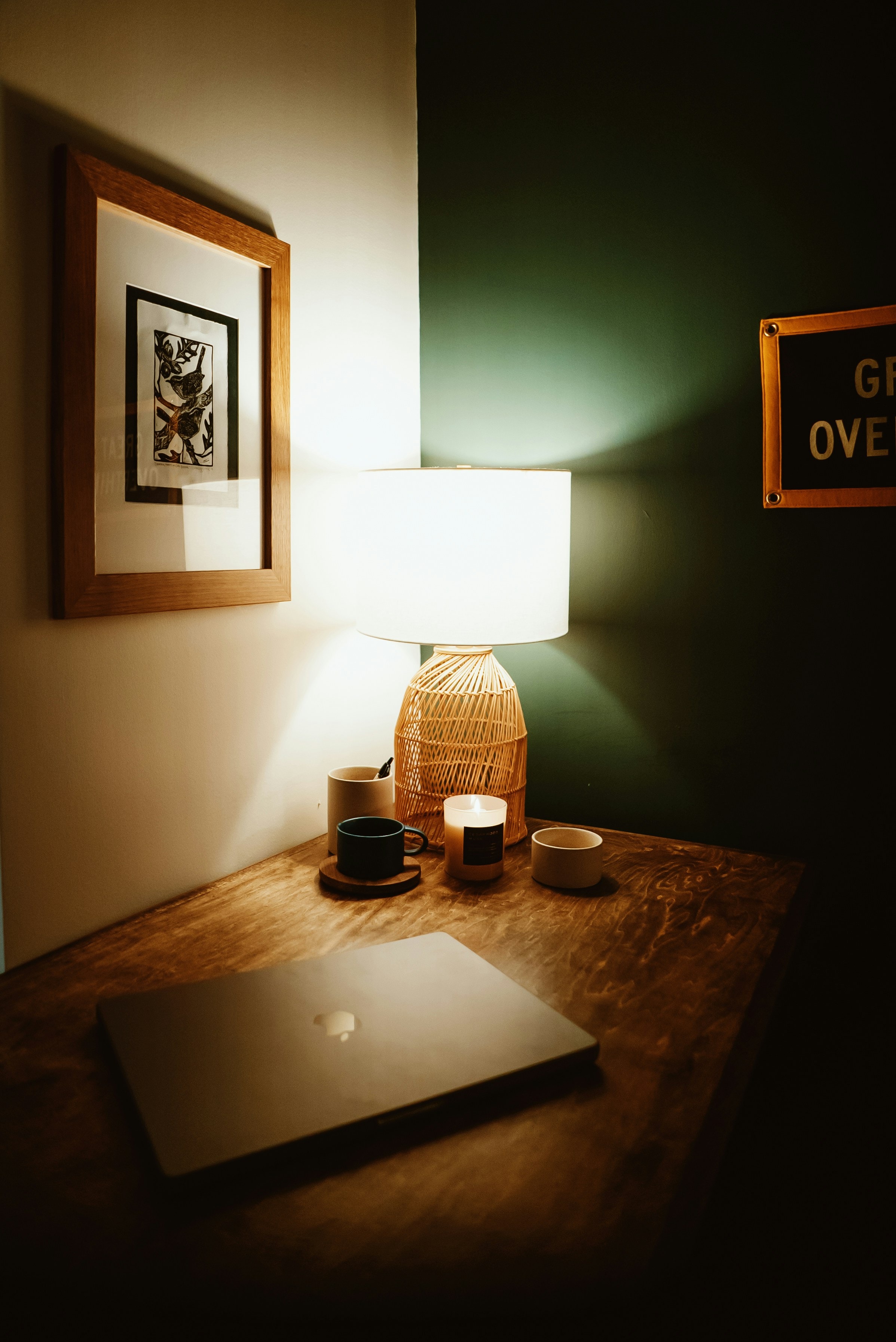
The spaces people actually love — the ones they photograph, the ones they linger in after the laptop closes — get something else right. The light is warm. The materials are honest: wood, linen, brushed metal, soft shadow. The tech is present but quiet. The small things are considered. These rooms don't announce that they're for work. They simply make working feel better.
That's the standard we hold everything to here. A chair should hold you and the room together. A screen should sit well in the eye-line and the interior. A lamp should flatter your calls at noon and your wind-down at six. Inspiring and functional aren't competing demands. In a well-made space, you stop being able to tell them apart.

You don't need a spare room
Here's the part that matters most, and the part the glossy home-office features always miss: this is not about square footage.
A windowsill with a stool and a good task lamp. An alcove under the stairs. The end of a hallway, claimed by a slim desk and a single shelf. Some of the most considered working spaces we'll ever feature are the smallest — because constraint concentrates taste. When you only have room for one lamp, one tray, one chair, every choice carries weight. Nothing gets in by default.
Big or small, the principle is the same. Any space can be made worthy of your working day. The question is never how much room you have. It's how much intent you bring to it.
What we're for
So this is Workspace Worthy: a guide to carving out somewhere that's as inspiring as it is functional. Furniture to carry you through the long hours. Tech that earns its place. Accessories with intent.
We'll be unhurried about it. No hacks, no hustle, no battle-stations. Just considered spaces, well-chosen things, and the quiet conviction that the hours you spend working are hours of your life — and the space that holds them should be worthy of that.
Make your space work. Tastefully.