Walk into any space that feels wrong and the culprit is usually overhead.
A single ceiling light, cool-white and unforgiving, flattening every surface it touches. It's the default lighting of rented flats, spare rooms and hastily claimed corners everywhere — and it's quietly the reason so many working spaces feel like waiting rooms. The furniture gets blamed. The size of the room gets blamed. But nine times out of ten, the problem is the light.
Which is good news, because of everything you could change about your space, light costs the least and changes the most.
Layers, not brightness
The instinct, when a space feels dim or dreary, is to add brightness. Resist it. A well-lit space isn't a bright one — it's a layered one. Interiors people have worked in three layers for a century, and the working corner deserves the same treatment.
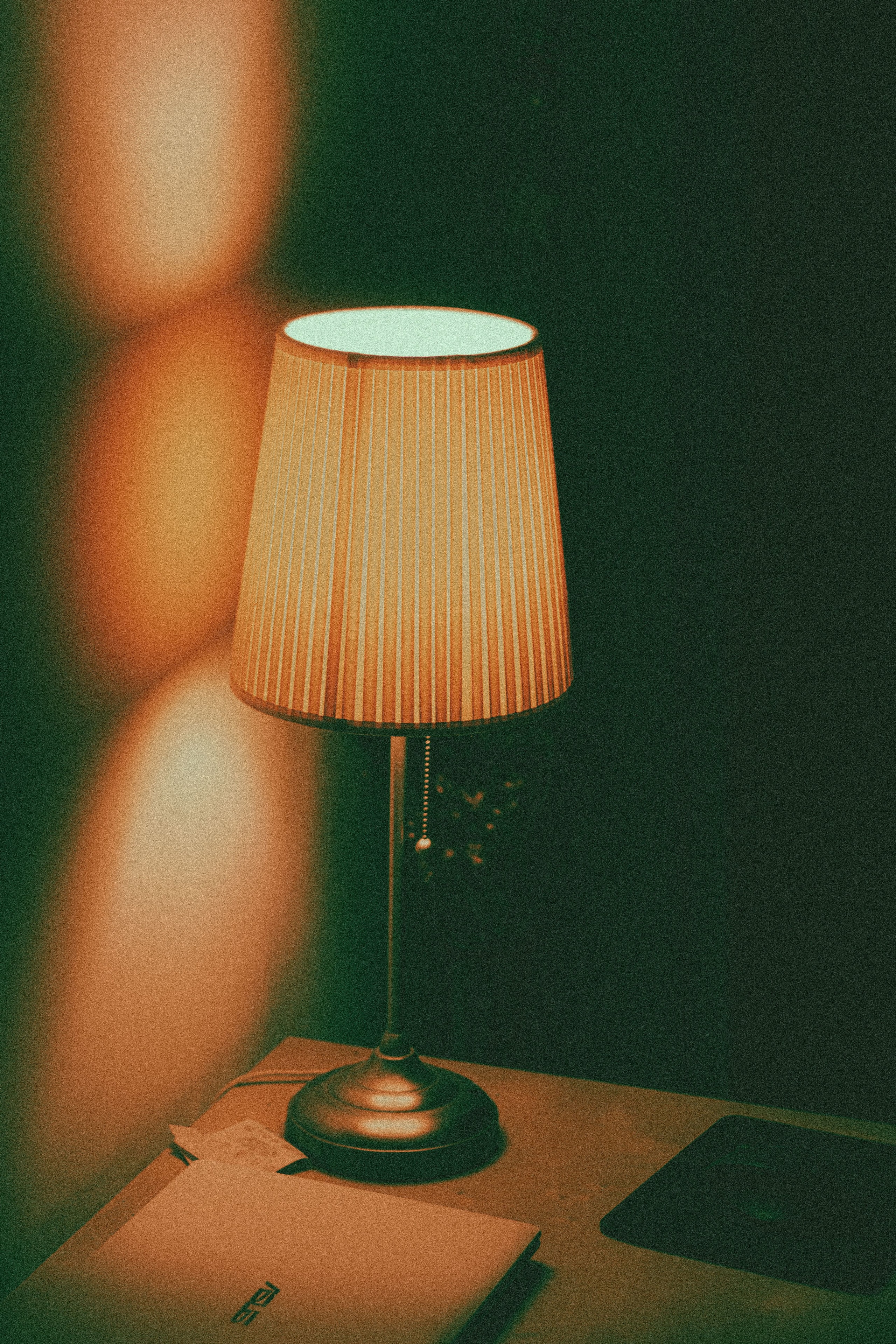
The task layer is the light you actually work by: a lamp with a directional head, positioned to the side of your screen rather than behind or in front of it. Beside, not behind, is the whole trick — light from behind you throws glare onto the screen; light from in front of you becomes a spotlight in your eyes on every call. To the side, at roughly the height of your seated eye-line, it does its job and disappears.
The ambient layer is the room's mood — and it's the layer the ceiling light does worst. A floor lamp in the far corner, a small table lamp on a shelf, anything that pools warm light at or below head height. The aim is to soften the edges of the space so your screen isn't a bright rectangle in a dark room, which is precisely the contrast that tires your eyes by late afternoon.
The accent layer is optional and entirely for pleasure: a picture light over a print, a warm glow behind a monitor, a candle-height lamp on the windowsill. It's the layer that makes a space feel finished rather than functional. One accent is plenty. This is seasoning, not structure.
"A well-lit space isn't a bright one — it's a layered one."
The temperature that changes everything
If you take one number away from this piece, make it this: somewhere around 2700K.
Bulb temperature is measured in kelvins, and most of the harsh, clinical light in the world sits at 4000K and above — the blue-white register of supermarkets and dental surgeries. Warm white, in the 2200–3000K range, is the light of lamps, evenings and rooms people want to stay in. Swapping the bulbs in your working corner from cool to warm is a five-minute change that reads, to the eye, like a renovation.
There's a case for nuance across the day. Cooler light in the morning suits focus; warmer light from mid-afternoon eases the descent toward evening. Smart bulbs handle this shift automatically, and it's one of the few pieces of clever tech we'd call genuinely worth it — not because it's impressive, but because you stop noticing it within a week. That's the highest compliment tech can earn here.
Lit like you mean it
The deeper point is this: light is where the difference between a space that happened and a space that was chosen shows most plainly. Furniture takes budget. Square footage takes luck. But the decision to switch off the ceiling light and work by a warm lamp instead — that takes only intent, and it announces itself the moment anyone (including you) enters the room.
Your calls will look better. Your evenings will start softer. And the corner you carved out for work will begin to feel less like a station and more like a place.
Start with one lamp, warm bulb, to the side of the screen. Everything else can wait.